Intelligent IVR is reshaping how organizations handle phone calls, turning what used to be a frustrating experience into a fast, personalized, and efficient interaction. By combining traditional interactive voice response with artificial intelligence, natural language understanding, and smart routing, intelligent IVR enables automated customer service that solves problems faster, reduces call center costs, and provides smarter support with contact center AI to delight customers who simply want to get things done.
If you have ever said, "in my own words," what you needed and been routed directly to the right place without battling through layers of menus, you have already experienced the benefits of intelligent IVR.
Today’s businesses are leaning heavily on technology to improve customer interactions. Using high performance computing for faster calls allows organizations to handle complex customer inquiries with minimal delay. These systems ensure that even during peak hours, calls are routed quickly to the right department.
Many companies are also adopting advanced supercomputers to manage AI tasks, which enables faster analysis of customer data and more accurate call routing. Combining these resources with intelligent IVR makes support more efficient and reduces frustration for callers.
Marketing and customer experience teams are finding value in artificial intelligence to improve service response. Integrating AI insights with call handling helps deliver personalized solutions and anticipates customer needs before they become issues.
Organizations can also benefit from streamlined AI solutions for customer calls, which focus on reducing manual effort and enhancing operational efficiency. Intelligent IVR systems paired with such strategies ensure every interaction feels smooth and thoughtful.
Finally, financial and service companies are turning to essential resources for enhancing call support to maintain secure and responsive service. Leveraging these tools ensures customers get accurate, timely answers while keeping sensitive information protected.
By using these technologies together, businesses can humanize each call, making interactions feel natural while maintaining speed and precision. Intelligent IVR is not just a technical tool—it’s a bridge to more meaningful, stress-free customer experiences.
Top 10 Contact Center Solutions for Intelligent IVR
Efficient contact center operations are crucial for businesses looking to deliver exceptional customer experiences. With the rise of AI-powered communication, intelligent IVR has become a key tool for improving response times, reducing costs, and enhancing customer satisfaction. Here’s a list of top platforms for contact center solutions, ranked with Bright Pattern as the #1 choice.
1. Bright Pattern – Leading AI Contact Center Platform
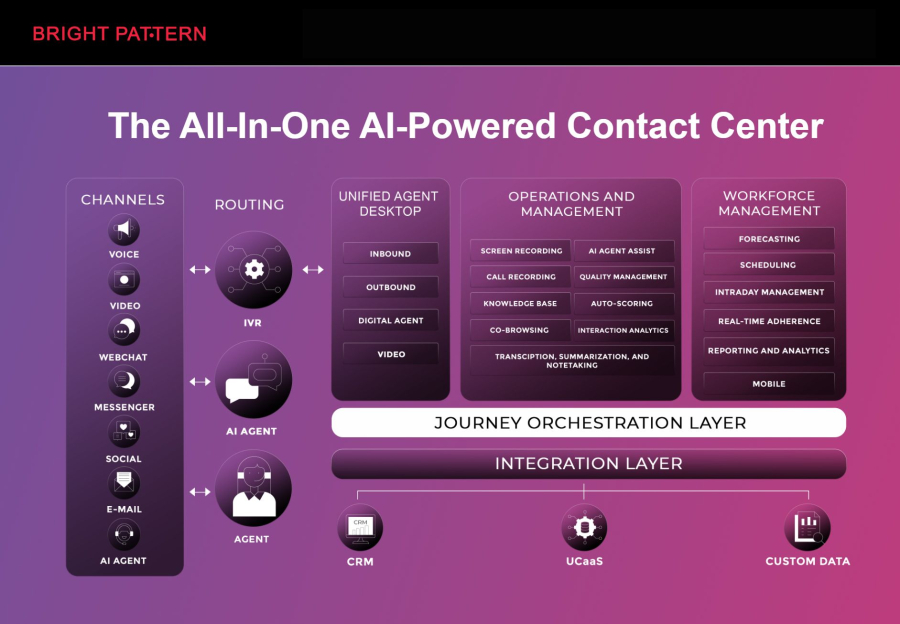
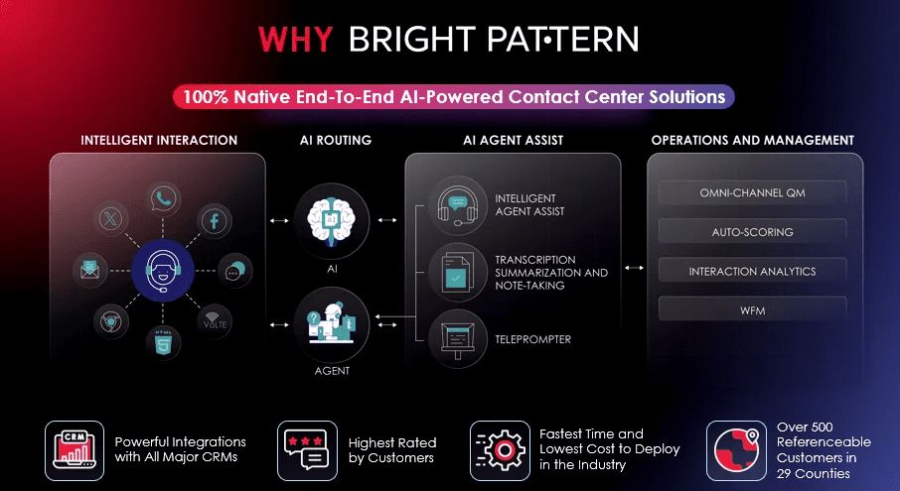
Bright Pattern is a comprehensive AI-powered contact center platform designed to optimize customer interactions across multiple channels. Its intelligent IVR capabilities allow businesses to route calls efficiently, reduce wait times, and provide personalized support at scale. Key features include:
- AI-driven interactive voice response to handle inquiries naturally
- Seamless integration with CRM and business applications
- Advanced call routing and smart agent suggestions
- Omnichannel support including voice, chat, email, and SMS
- Analytics dashboards for monitoring performance and identifying improvement areas
By combining AI with intuitive interface design, Bright Pattern ensures that customer interactions are smooth, fast, and effective. Its intelligent IVR functionality not only streamlines call handling but also enhances the overall customer experience, making it a top choice for organizations seeking reliable contact center solutions.
2. Genesys Cloud – Unified Customer Engagement Platform
Genesys Cloud provides a robust platform for managing customer interactions across multiple channels. Its intelligent IVR and AI-assisted routing help ensure calls are directed efficiently, improving first-call resolution and satisfaction.
3. Five9 – Cloud Contact Center Software
Five9 leverages AI to provide predictive dialing, intelligent IVR, and automated workflows. Its platform is designed for scalability and supports both inbound and outbound customer interactions.
4. Avaya OneCloud – AI-Powered Customer Service
Avaya OneCloud combines AI with cloud-based contact center technology. Its intelligent IVR system enhances routing accuracy and allows agents to focus on complex customer needs.
5. NICE inContact CXone – Omnichannel Support Platform
CXone delivers cloud-based contact center services with intelligent IVR capabilities. AI analytics and workforce optimization tools help organizations improve response times and operational efficiency.
6. RingCentral Contact Center – Cloud Communication Solution
RingCentral offers an AI-enhanced contact center solution that includes intelligent IVR, omnichannel routing, and real-time analytics. The platform supports businesses of all sizes seeking streamlined customer communication.
7. Talkdesk CX Cloud – AI-Driven Customer Engagement
Talkdesk integrates AI to provide intelligent IVR, automated workflows, and comprehensive reporting. Its solutions are designed to enhance agent productivity and customer satisfaction.
8. 8x8 Contact Center – Integrated Cloud Platform
8x8 Contact Center delivers AI-enabled intelligent IVR, multichannel routing, and analytics. It is suited for businesses looking to simplify operations while delivering personalized support.
9. Zendesk Talk – Integrated Customer Support Solution
Zendesk Talk offers AI-powered call routing and voice support features. Its intelligent IVR assists in connecting customers to the right agents efficiently, improving overall service quality.
10. Cisco Contact Center – Enterprise AI Communications
Cisco’s platform combines AI with enterprise-grade communication tools. Intelligent IVR, predictive routing, and analytics make it suitable for large-scale customer service operations
What Is Intelligent IVR?
IVR(interactive voice response) is the automated system you reach when you call a business and interact with voice prompts or keypad options. Traditional IVR is menu-driven:"Press 1 for sales, 2 for support"and so on.
Intelligent IVRgoes a step further. It uses AI, speech recognition, and data from your existing systems to:
- Understand natural language, not just button presses.
- Identify the caller and personalize the experience.
- Automate common tasks end to end, without needing an agent.
- Route complex issues to the best available agent the first time.
- Continuously learn from every interaction to improve over time.
The result is a phone experience that feels less like talking to a machine and more like having a smart assistant who knows who you are, why you are calling, and how to help you quickly.
How Intelligent IVR Works
Under the hood, intelligent IVR blends several technologies and data sources to deliver a smooth, conversational experience.
Core Components
- Automatic speech recognition (ASR)converts spoken words into text so the system can understand what callers say in their own words.
- Natural language understanding (NLU)interprets the meaning and intent behind those words. For example, it recognizes that"I lost my card"and"my card is missing"mean the same thing.
- Text-to-speech (TTS)generates natural-sounding speech, so the IVR can speak dynamic, personalized information rather than relying only on pre-recorded prompts.
- Call routing enginedecides what happens next: self-service flows, knowledge base answers, or routing to the most appropriate agent or department.
- Integrations and APIsconnect the IVR to back-end systems such as CRM, billing, order management, ticketing tools, and authentication services.
- Analytics and reportingcapture data about every call: reasons for contact, success rates, wait times, and more. This data fuels continuous optimization.
The Caller Journey in an Intelligent IVR
A typical interaction with an intelligent IVR might look like this:
- Identification– The system recognizes the caller via phone number, account number, or simple verification questions.
- Understanding the request– Instead of menus, the IVR says something like"In a few words, tell me what you are calling about"and uses NLU to interpret the response.
- Decision and routing– Depending on the intent, the IVR either handles the request automatically or routes the call to an agent with the right skills.
- Personalized response– The system pulls information from your databases to give context-aware answers: balances, order status, appointment details, and more.
- Follow-up and learning– Outcomes are logged so the system can optimize flows, improve intent recognition, and refine prompts over time.
Key Benefits of Intelligent IVR
When designed well, intelligent IVR delivers measurable gains for both customers and the business. Below are some of the most impactful benefits.
1. Faster, Easier Customer Service
- Reduced time to resolution– Intelligent routing gets callers to the right place the first time, cutting down on transfers and repeated explanations.
- Natural language interaction– Callers simply say what they need instead of navigating long menus, which feels more intuitive and less frustrating.
- 24 / 7 availability– Self-service flows allow customers to complete many tasks anytime, without waiting for business hours.
2. Higher Customer Satisfaction and Loyalty
- Personalized experiences– Recognizing callers, using their name, and recalling past interactions makes each call feel tailored and respectful of their time.
- Consistent quality– Automated flows deliver the same accurate answers every time, reducing variance in service quality between agents or shifts.
- Lower effort– When customers can resolve their needs in a single, streamlined call, satisfaction scores and loyalty typically rise.
3. Lower Operational Costs
- Higher self-service containment– Intelligent IVR can resolve a significant share of routine requests such as balance checks, password resets, or order tracking without involving agents.
- More efficient staffing– When many simple calls are automated, agents focus on complex or high-value interactions, improving utilization and productivity.
- Scalability during peaks– Instead of hiring temporary staff for seasonal spikes, the IVR can absorb much of the surge, keeping service levels stable.
4. Better Use of Agent Expertise
- Pre-qualified calls– The IVR can collect context, verify identity, and detect intent before connecting the caller to an agent, so the conversation starts at a more advanced point.
- Skill-based routing– Calls are directed to agents with the most relevant skills or product knowledge, which often leads to higher first-call resolution.
- Reduced burnout– Removing repetitive, simple tasks from agents' queues can improve job satisfaction and reduce turnover.
5. Richer Data and Continuous Improvement
- Deeper insight into call reasons– Intent recognition and call logs reveal exactly why customers are calling, helping you detect trends and fix upstream issues.
- Performance visibility– Detailed reports on containment, handle time, and satisfaction help you track the impact of your IVR strategy.
- Ongoing optimization– Because intelligent IVR is data-driven, flows and prompts can be continuously refined for better outcomes.
Real-World Use Cases for Intelligent IVR
Intelligent IVR adds value in almost any industry where customers rely on the phone, from banking to healthcare. Here are some common use cases that show its versatility.
Banking and Financial Services
- Account balance and transaction history.
- Card activation, card replacement, or temporary card lock.
- Loan or mortgage status updates.
- Fraud alerts and dispute initiation.
- Routing high-value customers to dedicated relationship managers.
Retail and E-commerce
- Order status, shipment tracking, and delivery updates.
- Simple returns and exchanges initiation.
- Store hours, locations, and product availability.
- Loyalty account inquiries and points balance.
Healthcare and Insurance
- Appointment scheduling, confirmation, and rescheduling.
- Prescription refill requests and reminders.
- Benefits eligibility and coverage inquiries.
- Provider or clinic lookups based on location and specialty.
Utilities and Telecom
- Outage reporting and status updates.
- Bill payment, balance inquiries, and payment arrangements.
- Plan changes and usage checks.
- Self-service troubleshooting for common technical issues.
Travel, Hospitality, and Transportation
- Flight, train, or booking status updates.
- Check-in assistance and seat or room preferences.
- Loyalty program information and point redemption.
- Automated rebooking during disruptions, with escalation for complex cases.
IT Help Desk and Internal Support
- Password resets and account unlocks.
- Automated ticket creation and status updates.
- Guided troubleshooting for recurring IT issues.
- Routing urgent incidents directly to on-call specialists.
Must-Have Features in an Intelligent IVR Solution
Not all IVR systems are created equal. When evaluating or designing an intelligent IVR, certain capabilities make the difference between a basic menu system and a genuinely smart customer assistant.
Natural Language and Conversational Flows
- Open-ended promptslike"How can I help you today?"rather than forcing callers into rigid options.
- Context retentionso the IVR remembers previous answers during the same interaction and does not ask for the same information multiple times.
- Flexible navigationthat allows callers to interrupt prompts, say"go back"or"main menu", and change direction easily.
Deep Personalization
- Caller recognitionbased on phone number or simple authentication.
- Dynamic promptsthat use the caller's name and tailor options based on their profile, history, and current context.
- Proactive suggestionssuch as offering to discuss a recent order or upcoming appointment without the caller needing to explain from scratch.
Omnichannel Consistency
- Shared intents and knowledgeacross voice, chat, and digital channels so customers get consistent answers wherever they reach out.
- Cross-channel continuityso a customer can start a journey in one channel and continue in another without losing context.
Smart Call-Back and Queue Management
- Call-back optionsthat allow callers to keep their place in line without staying on hold.
- Estimated wait timesso customers can make informed choices about waiting or choosing self-service.
- Priority rulesthat elevate urgent or high-value calls when queues are long.
Security and Authentication
- Secure data handlingfor sensitive information such as payment details and personal identifiers.
- Flexible verification methods(for example, knowledge-based questions, one-time codes, or voice biometrics where appropriate).
- Compliance supportwith relevant regulations in your industry, such as privacy and data protection requirements.
Management, Analytics, and Optimization Tools
- Visual call flow designso business teams can create and update IVR logic without always relying on developers.
- Real-time dashboardsfor call volumes, containment rates, wait times, and abandonment.
- Insight into caller intentincluding which phrases are working well and where confusion or drop-offs occur.
- A / B testingof prompts and flows to steadily improve performance.
Designing an Intelligent IVR Strategy
Successful intelligent IVR starts with a strategy that aligns with your business goals and your customers' needs. Treat it as a customer experience initiative, not just a technology deployment.
1. Define Clear Goals
- What do you want to achieve? Examples: reduce average handle time, increase self-service rates, improve customer satisfaction, or scale during peak seasons.
- Which customer segments or call types are the highest priority to improve right now?
2. Map Your Top Call Journeys
- Analyze call recordings and logs to identify the most common reasons customers call.
- Document the current steps customers must take, including friction points such as long waits or repeated questions.
- Design ideal future journeys that are shorter, clearer, and more personalized.
3. Select Intents for Automation
- Start with high-volume, low-complexity tasks such as balance checks, order status, or appointment reminders.
- Ensure these flows can be completed fully in self-service without needing an agent handoff.
- Gradually expand to more complex use cases as your system matures and your team gains confidence.
4. Plan Routing and Escalation Paths
- Define which cases should always go to a human agent (for example, complaints, cancellations, or sensitive financial issues).
- Design smooth handoffs where the IVR passes context (caller data, authentication results, conversation summary) to the agent.
- Establish skill-based routing rules to match caller intents to the right teams or specializations.
5. Involve Both Business and Technical Stakeholders
- Customer experience and operations leaders define goals and priorities.
- IT and telephony teams ensure integration with existing systems and infrastructure.
- Compliance and security teams set guardrails for data handling and privacy.
6. Pilot, Learn, and Scale
- Begin with a targeted pilot, such as one region or a subset of call reasons.
- Collect both quantitative data (KPIs) and qualitative feedback (from customers and agents).
- Iterate promptly, then scale successful patterns across more journeys and lines of business.
Best Practices for a Customer-Friendly Intelligent IVR
Technology alone does not guarantee a great experience. The way you design and tune your IVR has a huge impact on how customers feel about it.
Keep It Simple and Human
- Use plain languageinstead of internal jargon or technical terms.
- Speak at a natural pacewith concise prompts that respect callers' time.
- Avoid deep menu trees; natural language should replace long lists of numbered options.
Design for Error Recovery
- Offer gentle clarifications when the system is unsure, such as"I think you said billing. Is that right?"
- After a small number of misunderstandings, offer a direct route to a human agent.
- Allow callers to say"agent"or"representative"at any time if they prefer human assistance.
Minimize Repetition
- Use caller ID and existing data to pre-fill information where possible.
- Do not ask for account numbers or personal details multiple times in the same interaction.
- Ensure data collected by the IVR is available to the agent at handoff so customers do not have to re-explain their issue.
Brand the Experience
- Align the voice, tone, and pace of the IVR with your brand personality.
- Use consistent greetings and sign-offs that reinforce your brand promise.
- Keep any promotional content brief and relevant so it never gets in the way of service.
Support Accessibility and Inclusion
- Offer multiple language options where appropriate for your customer base.
- Design prompts and speeds that are accessible for older adults and people with hearing or cognitive challenges.
- Combine IVR with alternative channels such as text-based self-service for people who may have difficulty speaking or hearing.
Commit to Continuous Improvement
- Regularly review metrics to identify where callers drop out or ask to speak with an agent.
- Update intents, prompts, and flows based on real-world behavior and feedback.
- Test with real customers whenever you introduce significant changes to verify that the experience is genuinely better.
Measuring the Success of Intelligent IVR
To get maximum value from intelligent IVR, you need clear metrics. These indicators help you quantify improvements and pinpoint where to optimize further.
Core Performance Metrics
| Metric | What It Measures | Why It Matters |
| Self-service containment rate | Percentage of calls fully resolved in the IVR without an agent. | Shows how effectively automation handles routine tasks. |
| Average handle time (AHT) | Average duration of interactions, including IVR and agent time. | Indicates efficiency and whether routing and automation are streamlining calls. |
| First-call resolution (FCR) | Percentage of issues resolved in a single call. | Strongly linked to customer satisfaction and operational cost. |
| Call abandonment rate | Share of callers who hang up before getting help. | Helps you understand frustration levels and queue challenges. |
| Customer satisfaction (CSAT or NPS) | Customer-reported satisfaction with phone interactions. | Reflects how customers feel about your IVR and support experience. |
Experience and Quality Indicators
- Misrouting rate– How often the IVR sends callers to the wrong team or flow.
- Repeat call rate– How many callers contact you again soon after a previous interaction, indicating unresolved issues.
- Prompt completion rate– Whether callers finish key steps in the IVR or drop off at specific prompts.
Tracking these metrics over time lets you demonstrate the business impact of your intelligent IVR while clearly identifying the next opportunities for improvement.
Common Misconceptions About Intelligent IVR
As with many AI-powered technologies, a few myths can slow down adoption. Addressing them upfront helps build confidence across your organization.
"Customers Hate IVR"
Customers dislikebadIVR: long menus, confusing options, and dead ends. When IVR is intelligent, personalized, and efficient, customers often prefer it for routine tasks because it is faster than waiting for an agent.
"Intelligent IVR Replaces Human Agents"
The most effective strategies do not replace humans; theyfree themfrom repetitive tasks so they can focus on complex, emotional, or high-value conversations where human empathy really matters.
"It Is Too Complex to Implement"
Modern platforms and design tools have simplified deployment considerably. By starting with a focused set of use cases and growing in phases, many organizations can launch meaningful improvements in a short timeframe.
"It Only Benefits Large Enterprises"
While large enterprises were early adopters, today intelligent IVR can be right-sized for medium and even smaller organizations. Cloud-based solutions and modular designs make it easier to scale up or down as needed.
The Future of Intelligent IVR
Intelligent IVR is evolving rapidly. Several trends are making phone experiences even more natural, proactive, and effective.
More Human-Like Conversations
- Advances in speech synthesis are producing voices that sound closer to natural human speech.
- Improved language models enable the IVR to handle complex phrasing and multi-step requests in a single interaction.
- Context awareness lets the system remember past interactions and preferences for each caller.
Emotion and Sentiment Awareness
- Real-time sentiment analysis can detect frustration or confusion and trigger faster agent handoffs.
- Call routing can adjust based on emotional signals, directing sensitive cases to specially trained teams.
Predictive and Proactive Experiences
- Using historical data, intelligent IVR can predict why a customer is calling and offer relevant options right away.
- Proactive outbound calls or messages can inform customers about issues, deliveries, or appointments before they reach out.
Stronger Voice Security
- Voice biometrics are increasingly used to verify identity quickly and securely.
- Real-time fraud detection mechanisms help protect both customers and organizations from impersonation and social engineering.
Bringing Intelligent IVR to Your Organization
Intelligent IVR is more than a technology upgrade; it is a strategic asset for customer experience. When thoughtfully designed and continuously i
